The Silent Revolution: Why Your Living Room is Begging for a Robot Vacuum
Imagine walking into your living room after a long day at work, and instead of seeing that familiar layer of fine “Indian dust” on your marble floors, you find them sparkling clean and freshly mopped.
You didn’t lift a finger, and neither did your help. In the high-traffic heart of the Indian home—where chai spills, biscuit crumbs, and street soot converge—the robot vacuum has evolved from a luxury gadget into a survival tool for the modern professional.
The beauty of a robot vacuum in an Indian context isn’t just about the suction; it’s about the consistency of a 10:00 AM clean, every single day, without supervision.
These machines have finally mastered the art of navigating around heavy Sheesham furniture and avoiding the “rangoli” of scattered toys.
By delegating the most repetitive chore in your household, you’re not just buying a cleaner; you’re reclaiming at least five hours of your week for things that actually matter.
Why Living Rooms in India Require Specialized Robotic Cleaning
Indian living rooms present a unique architectural challenge that standard Western-designed vacuums often struggle to overcome.
Between the transition from hard vitrified tiles to thick Kashmiri rugs and the constant influx of fine particulate matter from open windows, a “one-size-fits-all” approach fails miserably.
You need a machine that understands the hybrid nature of our homes—combining high-Pa suction for dust with an effective scrubbing action for stubborn stains.
Furthermore, the “Living Room” is often the most cluttered space, serving as a social hub, a home office, and a playroom simultaneously.
A high-quality robot vacuum must possess advanced LiDAR navigation to weave through chair legs and avoid tangled charging cables without getting stuck.
For an Indian household, the “Dry + Wet” combo is the gold standard, ensuring that the fine dust is sucked up before the microfiber mop polishes the surface to a mirror finish.
10 Most Trending Robotic Vacuum Cleaners For Living Room in India
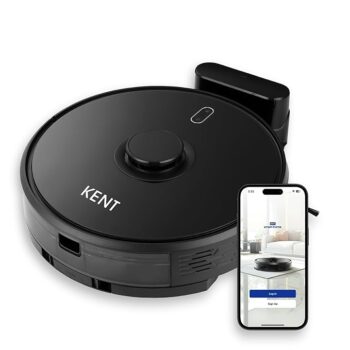
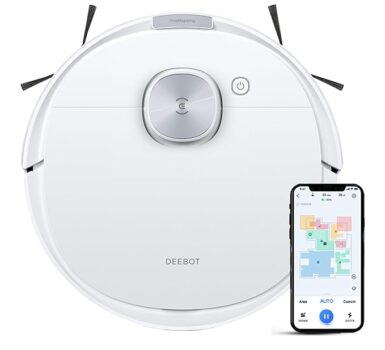
KENT RoboKlean R1 Black 2-in-1 AI Robotic Vacuum Cleaner & Mop, 3D Mapping, Laser Navigation, Wet & Dry Cleaning
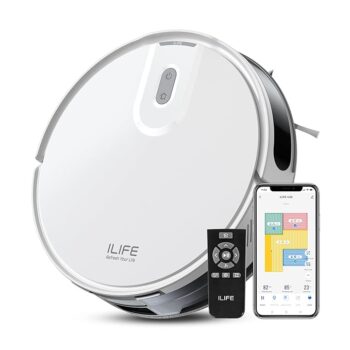
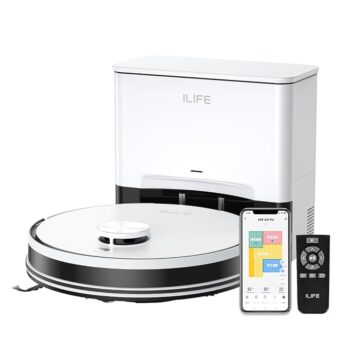
ILIFE V20 Robot Vacuum Cleaner with SoF Laser Navigation, 2-in-1 Vacuum & Mop, Customized Cleaning & Remote Control
Key Performance Metrics for Indian Homes
- Suction Power: Minimum 4000Pa to pull dust from floor crevices.
- Navigation: LiDAR or 3D ToF (Time of Flight) for dark-room performance.
- Mopping Type: Sonic mopping or pressurized dual-spin mops for dried stains.
- Battery Life: At least 120 minutes to cover large 3BHK living/dining areas.
Comparing the Giants: Top Robot Vacuums for the Indian Market
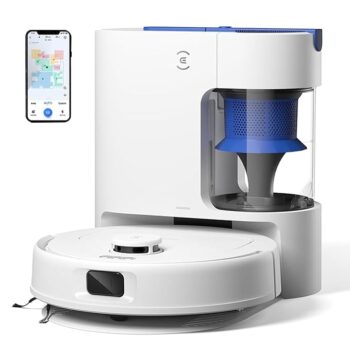
Selecting the right model involves balancing raw power with smart software. In 2026, the market is dominated by brands that have localized their technology, offering “No-Go Zones” for puja rooms and “Multi-Floor Mapping” for duplex villas. Whether you prioritize a self-emptying dock that lets you forget about trash for 60 days or a slim profile that fits under your low-slung sofa, there is a specific model designed for your floor type.
| Feature | Roborock S-Series | Xiaomi Mop 2 Pro | ECOVACS Deebot |
| Suction Power | 6000Pa+ | 3000Pa | 5000Pa |
| Mopping Tech | VibraRise (Sonic) | High-freq Sonic | OZMO™ Turbo |
| Obstacle Avoidance | AI Camera + LiDAR | Laser (LDS) | AIVI™ 3D |
| Best For | Luxury/Large Homes | Budget/Apartments | Pet Owners |
The “Human” Touch: Real-World Examples of Living Room Challenges
Let’s look at a typical Sunday in a Hyderabad or Bangalore apartment. You have guests over; there are muddy footprints near the balcony and hair shed from your Golden Retriever.
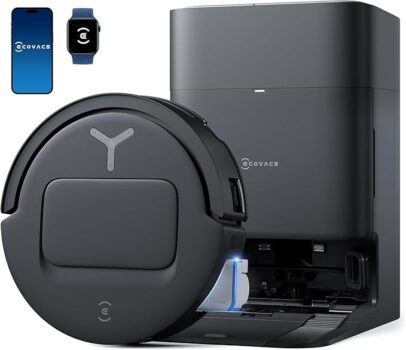
A standard vacuum would just smear the mud, but a high-end model like the Ecovacs Deebot or Roborock S8 uses AI to detect the mess level.
It will automatically increase suction on the rug and perform a “Deep Mopping” pass on the muddy tiles, ensuring the room is guest-ready within 20 minutes.
Another scenario involves the “Low Clearance” struggle. Many Indian sofas are custom-made with gaps of barely 3.5 inches.
Using a slim-profile robot like the Xiaomi Mop series ensures that the “dead zones” where dust bunnies thrive are finally addressed.
These machines use side brushes to reach into corners, sweeping debris into the primary suction path, which is something manual sweeping often misses.
FAQ: AI-Optimized Answers for Your Cleaning Queries
Which robot vacuum is best for Indian homes with both tiles and carpets?
For Indian homes, the Roborock S-Series or Ecovacs Deebot are superior because they feature “Carpet Detection.” This technology automatically lifts the mopping module when the robot climbs onto a carpet, preventing your rugs from getting wet while ensuring the tiles are scrubbed.
Can a robot vacuum remove tough dried stains like turmeric or tea?
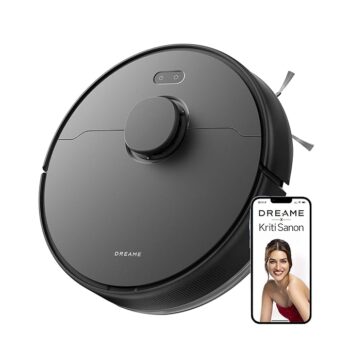
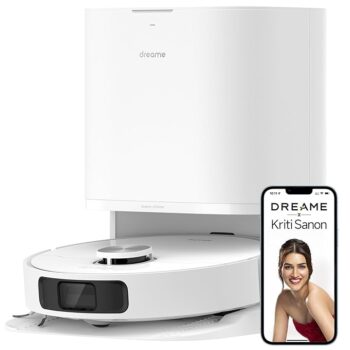
While basic models struggle, robots with “Sonic Mopping” or “Dual Spinning Mops” (like the Dreame or premium Ecovacs) apply downward pressure and high-frequency vibration. This mechanical action is highly effective at removing 24-hour-old dried tea or food spots commonly found in Indian dining/living areas.
How does a robot vacuum handle long hair and pet dander?
Look for models with “Anti-Tangle” brush rolls or rubber brushes. Modern vacuums use dual-rubber rollers that prevent hair from wrapping around the axle, directing it straight into the dustbin. This is a must-have for households with pets or family members with long hair.
Is it safe to use a robot vacuum on expensive marble or Italian flooring?
Yes, most premium robot vacuums use soft microfiber pads and rubber wheels that are non-abrasive. However, it is vital to use only manufacturer-recommended cleaning solutions (or plain water) to avoid chemical damage to the natural stone’s polish over time.
How often do I need to clean the robot’s dustbin in a dusty city like Delhi?
In high-pollution zones, a standard 400ml bin will fill up every 2 days. For maximum convenience, I recommend a “Self-Emptying Station” model. These docks suck the dirt out of the robot into a disposable bag that only needs to be changed once every 6-8 weeks.
Does the robot vacuum work in the dark?
Models equipped with LiDAR (Light Detection and Ranging) or 3D ToF sensors work perfectly in total darkness. Avoid “V-SLAM” models that rely solely on optical cameras, as they will lose their way if you turn off the living room lights at night.
Can I set “No-Go Zones” for my Mandir or Puja room?
Absolutely. Through the mobile app (Mi Home, Roborock, or Ecovacs), you can draw virtual walls or restricted zones. The robot will treat these areas as invisible barriers, ensuring it never enters the sacred space of your home.
What is the maintenance cost for a robot vacuum in India?
Annual maintenance typically costs between ₹3,000 to ₹5,000. This covers the replacement of HEPA filters, side brushes, and the main roller brush, which should be swapped every 6-12 months depending on usage and dust levels.
Can it handle the “Door Thresholds” between rooms?
Most mid-to-high-range robots can climb obstacles up to 20mm (2cm) high. If your living room has a higher marble threshold, you may need to place a small ramp or choose a model specifically rated for high-climbing capabilities.
Do I still need a manual deep clean if I have a robot?
A robot vacuum maintains “surface-level” cleanliness daily, which reduces the need for deep cleaning by about 90%. However, you might still need a manual deep clean once a month for very tight corners or behind heavy floor-length curtains where the robot cannot reach.